
You may have asked yourself: is Ludo a luck based game? Perhaps after rolling the dice several times with little progress, wondering if winning depends more on chance than your decisions. In this blog, you will explore that question deeply. You will learn about the origin of Ludo game, what makes it work, what the benefits of Ludo are, how much strategy versus luck matter, and the advantages of Ludo game when played well. This will help you see whether Ludo is good or bad, and what rules or variations can change the answer.
What Is Ludo Board Game and Ludo Original Rules
To decide whether Ludo is primarily luck based, you must understand what is Ludo board game, its origins, and its original rules.
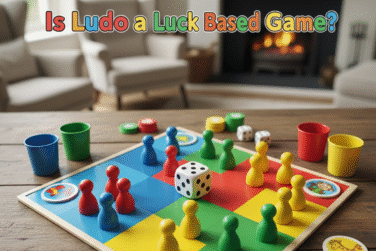
- What is Ludo board game: Ludo is a cross and circle style board game for 2 to 4 players, where each player has four tokens. Players roll a single die, move tokens from a starting area around a track, and try to bring all tokens home.
- Ludo original rules: In the classic version derived from Pachisi, you need a specific roll, usually a six, to bring a piece out of the yard. Movement is determined by dice roll. Landing on an opponent’s token knocks it back to start, while safe squares protect tokens.
These original rules make luck visible. You cannot move unless the dice gives you the right number, and you cannot avoid bad rolls. But you also have choices. You can decide which token to move, whether to risk moving close to opponents, or whether to stay in safe spots.
Ludo Game Origin and Which Country Made Ludo Game
To understand more deeply, you should know ludo game origin and which country made Ludo game. Tracing its roots helps you see how chance and strategy were balanced historically.
- The ludo game origin is the ancient Indian game Pachisi, invented centuries ago. Pachisi involved cowrie shells for random outcomes, so chance was built in.
- Which country made Ludo game in its modern form: While Pachisi is Indian, the version known as “Ludo” was patented in England in 1896 by Alfred Collier. He adapted Pachisi to be simpler, with cubic dice and a standardized board.
From its roots, the game always had both luck and strategy.
Luck vs Strategy: Understanding the Balance
Here comes the heart of the matter. Is Ludo a luck based game, or does skill matter just as much?
Role of Luck
You cannot deny that in Ludo, chance plays a strong role.
- The dice roll is entirely random. You may need a specific number to move out of base, capture an opponent, or reach home. Missing that number delays you.
- Rolling a six can dramatically change your game pace. If you get many sixes early, you gain a big advantage.
- Opponents’ rolls can disrupt your plan. They may capture your pieces or block your path.
Role of Skill
Even though luck is built in, skill and decision making are equally important, especially over many games. Some skill areas include:
- Token management: Deciding which token to move when you get a certain roll.
- Use of safe zones: Staying in safe squares to avoid being knocked back.
- Blocking opponent: Positioning your piece to prevent opponent progress.
- Balancing speed vs safety: Knowing when to push forward aggressively and when to stay cautious.
- Probability awareness: Estimating chances of needed rolls or opponent’s moves.
Over many games, players who use good strategy tend to win more often.
Modern Variations and Competitive Play
Another angle is how modern versions shift the balance between chance and skill.
- In India, courts have debated whether Ludo should be seen as a game of skill or chance. This distinction matters legally when stakes are involved.
- Online platforms such as mobile apps often introduce formats that reward skill more, with ranking systems, timed modes, point scoring, and rewards for captures. These variations reduce the dominance of pure luck.
Thus Ludo game 2025 is not exactly the same as the classic board Ludo. Online versions often lean toward strategy.
Is Ludo Game Good or Bad? Uses, Benefits and Advantages of Ludo Game
Knowing all this, is Ludo game good or bad? What are its uses, benefits of Ludo, and advantages of Ludo game?
Benefits and Advantages
- Cognitive development: Playing Ludo enhances strategic thinking, probability estimation, and planning.
- Decision making and risk assessment: You learn when to take risks and when to play safe.
- Social interaction: Ludo brings people together, both online and offline.
- Emotional skills: Handling unlucky rolls builds patience and resilience.
- Entertainment and stress relief: Simple to learn yet engaging, it provides unpredictability that keeps it fun.
- Educational uses: For children, it teaches counting, turn taking, randomness, and fairness.
Uses
- Leisure play: Easy and inclusive, requiring minimal equipment.
- Online gaming: Tournaments, leaderboards, and sometimes even real money stakes where legal.
- Therapeutic use: Helps families spend quality time and reduces loneliness.
Overall, ludo game uses go far beyond mere chance.
Importance of Ludo Game
The importance of Ludo game lies in what it teaches you. It is more than just rolling dice. Ludo game connects you to cultural history, builds cognitive and emotional skills, and provides a social outlet. It is important because it blends entertainment with learning, and because its mix of luck and skill keeps it engaging for everyone.
To What Extent Is Ludo a Luck Based Game?
After looking into origins, rules, strategy, and modern variations, you can conclude more clearly:
- In a single game, luck can dominate. If you roll poorly while opponents roll well, the outcome may feel unfair.
- Over multiple games, skill matters much more. The player who uses strategy, manages tokens smartly, and anticipates risks will win more often.
- Therefore, Ludo is not purely chance. It is a game of both luck and skill. In classic Ludo, luck may dominate, but in modern variations, skill plays a larger role.
Ludo Game 2025: What Is Changing
Since you included ludo game 2025, here are some recent changes shaping the way Ludo is played:
- Online platforms: More tournaments and skill-based formats reward strategic play.
- Rule variations: Some versions allow tokens to enter on numbers other than six, giving players more options.
- Fairness through technology: Random number generators in apps ensure fair dice outcomes.
- Data and analytics: Skilled players now track patterns and adapt more effectively.
In ludo game 2025, the skill element is stronger than before.
Is Ludo Game Good or Bad?
You may still wonder if Ludo is ultimately good or bad. Here is a balanced view.
- Good: It offers rich benefits, from cognitive and social to emotional. Its luck element keeps hope alive for every player, making it accessible.
- Bad: If you focus only on winning, frustration can take over when luck does not favor you. Also, in formats where money is involved, too much reliance on luck can feel unfair.
So Ludo is generally good, as long as you embrace it as a mix of skill and chance.
Conclusion
To answer is Ludo a luck based game in short: yes, but not only. Ludo is built on luck, but you can exercise real skill. You affect your chances through decisions, risk management, and strategy. With modern formats in ludo game 2025, skill has become even more important. And the benefits of Ludo are greatest when you accept the mix of chance and choice that makes the game timeless.
Frequently Asked Questions
What are some tricks to win in Ludo?
The best way to win is to balance offense and defense. Spread out your tokens instead of relying on just one, use safe zones smartly, and block opponents when you have the chance. Managing multiple tokens increases your chances of finishing first.
How can I increase my chances of luck in Ludo?
Luck is not in your control, but you can make the most of your rolls. By keeping more than one token active, you give yourself more movement options regardless of what the dice show. This way, even average rolls can work in your favor.
Is it possible to roll three sixes in a row?
Yes, you can roll three sixes in a row, although it is rare. Most versions of Ludo also apply the “three sixes” rule. If you roll three consecutive sixes, you usually lose your turn, so you must plan how to use the first two sixes wisely.
How do I move past a block in Ludo?
A block is when two tokens of the same color occupy a square, stopping others from passing. To get past a block, you need the block to be broken, either when the owner moves one token away or when house rules vary to limit how long a block can stay.
Which token color is considered the best in Ludo?
There is no fixed “best” color in Ludo because all colors follow the same rules. Some people prefer red or green as they traditionally start first in many versions. In the end, winning depends more on how you play than the color you choose.
What does the rule of six mean in Ludo?
The rule of six means you need to roll a six to bring a token out of your yard. Rolling a six also grants you another turn. However, if you roll three sixes consecutively, you usually lose your chance to play, depending on the version of the game.
Does changing rules make Ludo less luck based?
Yes. Variants that reduce waiting for specific rolls or introduce bonus systems increase the influence of skill.
What makes a good Ludo player?
A good player is patient, spreads tokens wisely, uses safe zones, and takes risks at the right time.